
Appointment Support
For the daughter three states away, and the spouse who cannot be at every visit.
Someone on the call who knows the whole story, and writes it down.
The cardiology appointment ran long. The provider talked quickly about a medication change and a referral. Your mother remembers the broad strokes but not the dose, and the portal note turns up three days later at two lines. Until somebody reconstructs it, the referral sits unplaced.
Administrative coordination and follow-through. Not medical advice, not clinical monitoring, not emergency response.
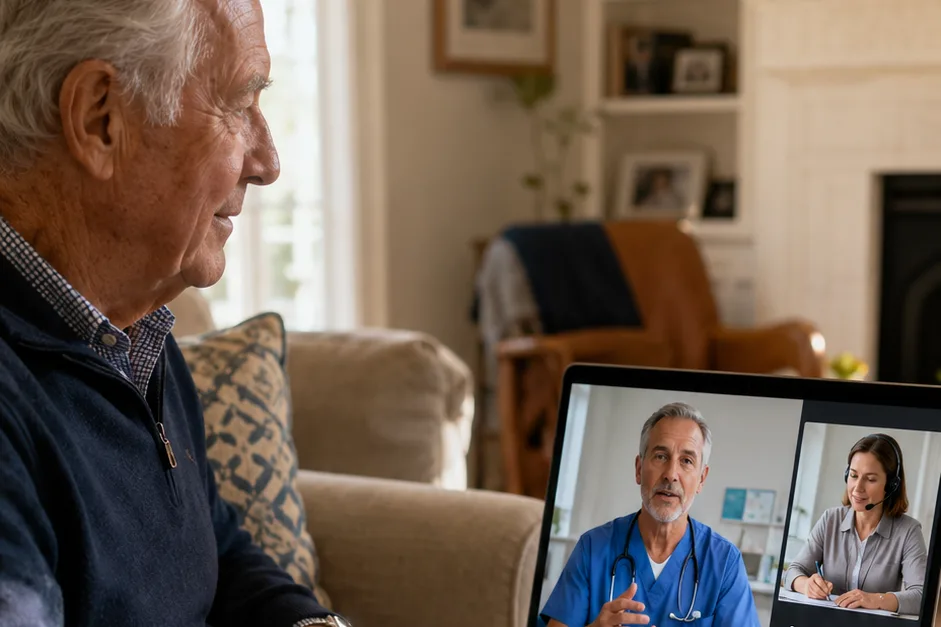
Before, during, after
The visit is the middle of the work, not the whole of it.
Attendance is scheduled in advance. A visit booked the same day may not have Care Continuity Partner availability, though same-day requests are accommodated when we can.
-
1
Before the visit
Your Care Continuity Partner pulls the relevant records from the Record Vault, reviews recent changes in the Care Ledger, gathers the questions the family wants asked, and confirms which referrals and orders are still open. Logistics get settled first: time, telehealth link, parking, who is in the room.
-
2
During the visit
They attend by phone or video as the family's historian, not as a clinician. They answer factual history questions from the records on file, take structured notes on what the provider says, and ask the questions the family approved beforehand. They do not interpret findings or make clinical decisions; the provider and the Supported Person do. When your family authorizes it and the provider and platform permit it, Averyn may use transcription-assisted tools to help draft the notes, and a person reviews what they produce.
-
3
After the visit
The calendar gets updated, referrals and prior authorizations get chased, medication changes go to the pharmacy and the Care Ledger, and active caregivers get the new instructions.
What you get
The visit, written down the same evening.
After-Visit Action Note
What changed, and who is chasing what.
What happened, what changed, what the family is doing at home, what your Care Continuity Partner is following up on, and what is still pending. It reaches the family the same evening or the next business day.
Open the full example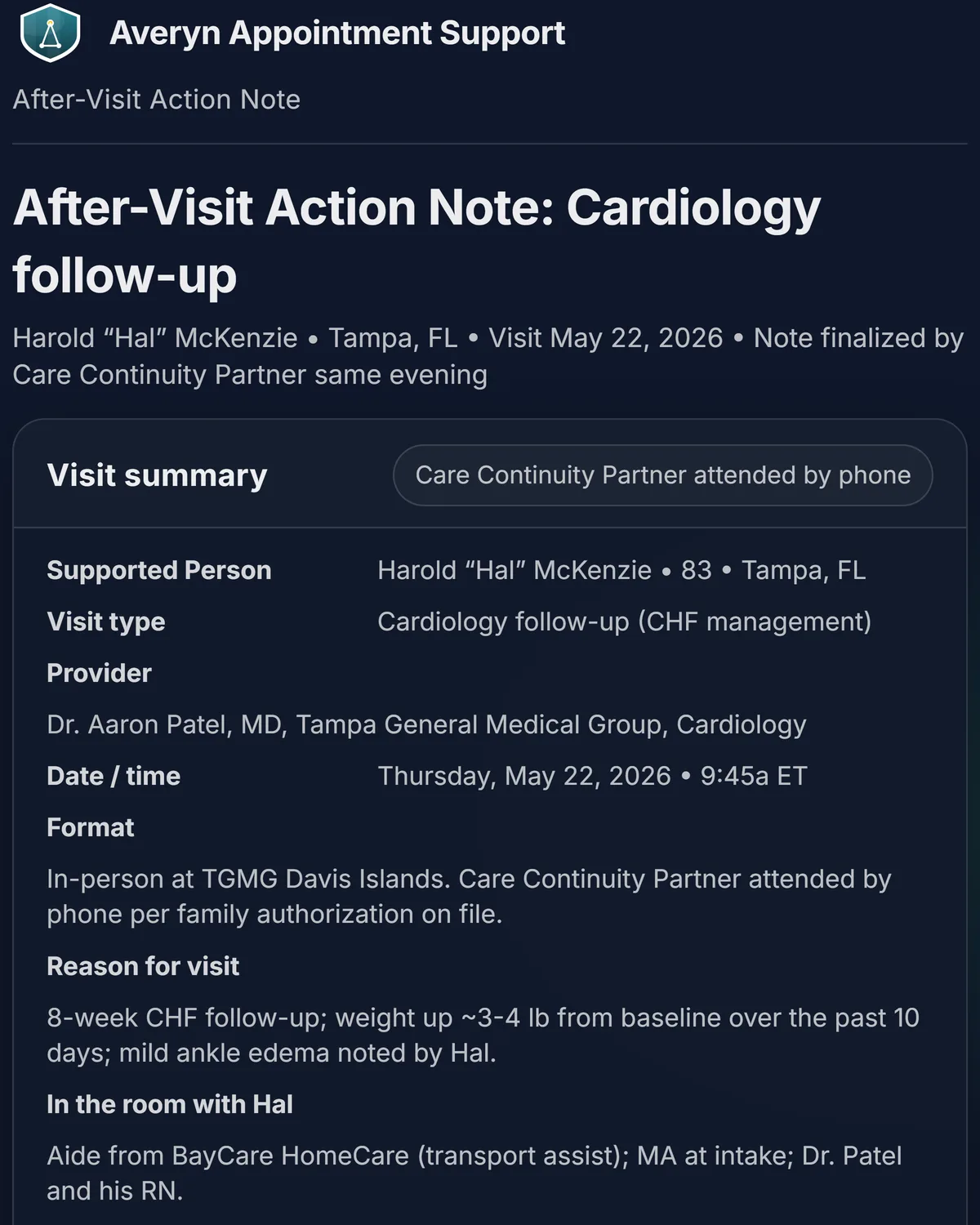
The historian
Providers assume someone holds the thread. Usually no one does.
Which medications were tried and stopped, which referrals are still open, when the last labs were drawn, what the cardiologist said that the primary care doctor has not seen yet. Your Care Continuity Partner has read the records, knows which loops are open, and remembers what the family asked about three weeks ago, so an intake question gets a real answer instead of a guess.
That one role, somebody who knows the story across providers, changes how much a single appointment can accomplish.
What it is not
A historian on the call, not a clinician.
Appointment Support is not medical advice, not clinical interpretation, not a judgment about urgency, and not consent to treatment. Licensed providers stay responsible for clinical decisions, and the note does not replace the provider's own.
It is phone or video only. In-person accompaniment is not something Averyn offers, attendance depends on advance scheduling and availability, and nothing is recorded without your authorization.
How it comes with each plan
Included on the larger plans, an add-on on the smallest.
On Essentials, Appointment Support is an add-on at $39 per visit, scheduled in advance. Expanded includes one visit per service month, with additional visits at $39. Dedicated includes it as needed, subject to reasonable use. Anchor includes it when the visit is scheduled in advance.
Also part of your Care Continuity Partner's work Averyn Concierge Line Averyn Ready
What changes
By the time the family group chat pings that night, the questions are answered.
Your sister asks what the cardiologist said. You forward the note. It carries the new dose and the reason for the change, the referral that was placed, and the one thing your mother is meant to do before Friday. Nobody has to call the office back to ask what happened.
You read the same page your sister does, and neither of you had to be in the room.
Stop reconstructing appointments from memory.
Fifteen minutes to talk about your providers, the visits that matter most, and what having your Care Continuity Partner on the call would change.